
Whole-System
Healing
Shoshannah works holistically with mind, body, nervous system, and relationships - addressing root causes, not just symptoms.

Expertise in Complex
& Chronic Patterns
Specialises in anxiety, trauma, chronic health issues, nervous system sensitivity, and family/relationship dynamics - especially when standard methods haven’t worked.

Integrated,
Lasting Change
Combines therapy, mindscaping, genetics, and natural medicine to create lasting transformation, focusing on prevention, resilience, and deep understanding - not quick fixes.
Shoshannah works on-line nationally and internationally,
and in person in St Albans, Hertfordshire, UK

Plant Healers: Aconitum napellus, Aconite, Shock, Panic and the Nervous System
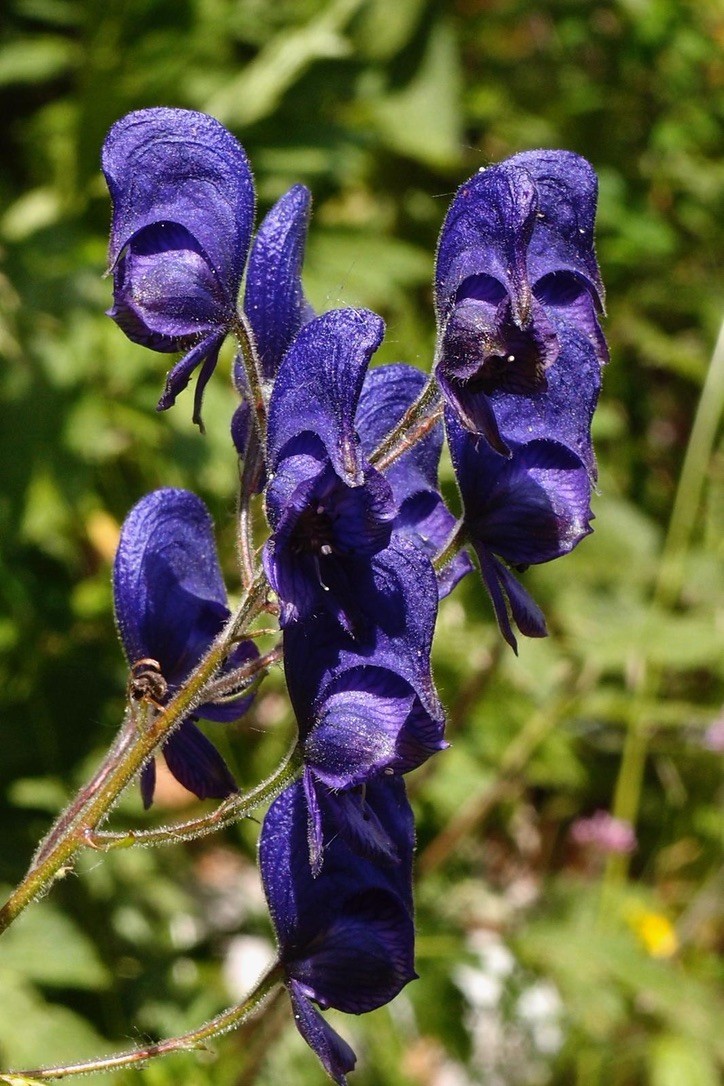
There are some plants that do not arrive softly. They do not hover at the edges asking to be noticed. They stand in the landscape with an unmistakable presence, vivid, sculptural, almost mythic, as though they belong equally to the worlds of medicine, poison, folklore, and spirit. Aconitum napellus, known more commonly as Aconite or Monkshood, is one of those plants. It is striking in appearance, with its rich blue-violet hooded flowers, and it carries a reputation that has echoed through centuries. It is beautiful, dramatic, and profoundly toxic in its crude form. Yet in homeopathy it becomes one of the great remedies for acute shock, terror, panic, sudden overwhelm, and the feeling that the body and mind have been thrown into alarm so intensely that the person believes something catastrophic is happening. This alone makes Aconite a fascinating plant to contemplate, because it takes us straight into one of the deepest truths in healing: that nature often reveals both the wound and the medicine in the same place.
Aconite is one of the remedies most closely associated with the experience of sudden fear. Not ordinary worry, not slow-building anxiety, but a sudden, overwhelming, physiological storm. It belongs to those moments when something has happened too fast for the system to process. A fright. A shock. A sudden bereavement. A bad accident. A terrifying diagnosis. A near miss. A panic attack that seems to come out of nowhere but feels as though the whole body has been seized by danger. In homeopathic practice, Aconite has long been associated with the immediate after-effects of such experiences, especially when the nervous system is still acting as though the threat is happening now. The heart races, the person may become restless, agitated, fearful, hyper-alert, unable to settle, unable to breathe properly, unable to think clearly. There can be a sense of impending death, a conviction that something dreadful is about to happen, and an intense sensitivity to everything around them. In that state, the body is no longer simply feeling emotion. It is living emergency physiology.
This is where Aconite becomes so interesting when viewed through the lens of the nervous system. The homeopathic picture corresponds so powerfully to what we now understand about acute sympathetic arousal. When a person is thrown into sudden terror, the nervous system mobilises for survival. Adrenaline rises. The heart pumps harder. Breathing becomes shallow or rapid. Blood flow shifts. Muscles tense. Perception narrows. The mind scans for danger. Time can distort. The body is not choosing this. It is responding through ancient circuitry designed to keep us alive. In some people, especially those whose systems have already been sensitised by earlier trauma, chronic stress, inflammatory burden, nutrient depletion, sleep disruption, grief, or relational insecurity, that surge can become more easily triggered and more difficult to switch off. What looks like panic is often the nervous system screaming that it has lost its sense of safety.
Aconite belongs to that exact threshold. It speaks to the moment when fear enters the body so completely that the person cannot reason their way out of it. This is one reason it can be such an important remedy in the early stages of shock and panic. In homeopathic form, it is not acting as a crude pharmacological poison. It is being used in a minute, potentised dose according to the principle that a substance capable of producing a certain pattern in a toxic form may, when prepared homeopathically, support the organism to resolve a similar pattern in a healing direction. This is one of the most misunderstood ideas in homeopathy, but it is also one of the most profound. The remedy is not suppressing the body’s alarm in the way a sedative might. It is more akin to offering a resonance, a signal, a reflection of the disturbed pattern, allowing the system to reorganise itself and come out of the shock state.
The crude plant itself, however, tells a very different story, and this is where the bridge between toxicology and remedy picture becomes so compelling. Aconitum species contain potent alkaloids, especially aconitine, which are known to affect the excitability of nerve and muscle tissue. In toxic exposure, aconitine interferes with sodium channel function, disturbing the normal electrical signalling of the nervous system and the heart. This can create symptoms such as tingling, numbness, burning sensations, weakness, dizziness, nausea, vomiting, abnormal heart rhythms, falling blood pressure, and in severe poisoning, life-threatening cardiac and neurological collapse. In other words, the toxic plant destabilises electrical communication in the body. It disrupts signalling, rhythm, coherence, and control. When we look at the homeopathic remedy picture, we see a kind of energetic echo of this same theme: the person feels electrically overwhelmed, physiologically destabilised, flooded by fear, unable to settle, unable to regulate. One is toxic disruption at the material level. The other is a patterned disturbance at the level of the whole organism. This is where the doctrine of signatures and the homeopathic principle begin to meet in a way that is both poetic and biologically evocative.
It is also worth pausing with the visual symbolism of the plant itself. Monkshood does not look like a soft, yielding flower. It looks armoured. Hooded. Guarded. Almost monastic and warrior-like at the same time. Its helmet shape suggests protection, concealment, readiness, vigilance. It grows with a certain intensity, often in cooler mountainous or meadow environments where weather, exposure, altitude, and the rawness of the elements are part of the ecology. It is not difficult to imagine why such a plant became associated with danger, protection, thresholds, and altered states. Some plants feel like they belong to the realm of nourishment. Aconite feels like it belongs to the realm of initiation. It seems to say: here is the edge between life and death, fear and courage, poison and medicine, terror and transformation. That is precisely why it holds such symbolic and therapeutic interest.
When we ask what service a plant like this performs in nature, we step into a more contemplative territory. At one level, its toxicity is protective. It deters herbivores. It ensures survival. It is part of how the plant holds its place in the ecosystem. Toxicity in nature is not a moral failure. It is intelligence. It is defence, boundary, potency, and relationship. Many of the most powerful medicines in the world come from plants that had to evolve strong chemical strategies in order to survive. Nature is not divided neatly into safe and dangerous, good and bad. It is relational, layered, and contextual. Dose, form, environment, preparation, timing, and sensitivity all matter. Aconite reminds us that what harms in one form may heal in another, and that strong boundaries are sometimes part of wisdom rather than evidence of hostility. That too makes it a psychologically interesting plant for people whose panic has roots in violated safety, sudden intrusion, grief, or trauma.
In grief, Aconite can have a special place when the loss has been sudden or experienced as a shock to the whole being. There are forms of grief that unfold slowly, heavily, and inwardly. There are others that strike like lightning. The death that was not expected. The phone call in the night. The diagnosis that changes everything in a second. The rupture that the body cannot yet absorb. In those moments, the nervous system may remain in acute alarm rather than moving into the deeper, slower work of mourning. The person may be frozen in the first blast wave of loss. They may be restless, frightened, unable to sleep, unable to settle, replaying the event, startled by every sound, convinced that more catastrophe is coming. This is not simply emotional distress. It is a nervous system still caught in the impact. Aconite, in the right case, can belong very powerfully to that phase.
From an integrative health perspective, panic and shock never happen in a vacuum. Even when the trigger is obvious, the resilience of the nervous system depends on terrain. This is where your work becomes so important, because you do not see people as a symptom or a label. You look at the whole matrix. You look at the nervous system, developmental history, trauma patterning, relational safety, nutrition, minerals, methylation, detoxification, inflammation, gut health, sleep, hormones, and genetics. Some people are far more vulnerable to acute anxiety states because their physiology is already operating with reduced buffer. Low magnesium, unstable blood sugar, chronic inflammation, sleep deprivation, overuse of stimulants, excessive cannabis, unresolved trauma, poor methylation support, impaired stress tolerance, high toxic load, and mineral depletion can all reduce the system’s ability to absorb challenge and return to baseline. A panic attack can be the visible event, but the deeper story is often that the body has been living close to threshold for a long time.
This opens the door to a very rich conversation about genes and pathways that influence nervous system sensitivity. Aconite is not a gene-specific remedy in any simplistic sense, but the kinds of people who may fall into these acute states can certainly have underlying vulnerabilities in genes related to catecholamine metabolism, stress signalling, inflammatory tone, detoxification, and neurochemical balance. Variants affecting COMT, MAOA, MAOB, dopamine receptor function, serotonin transport, GABA balance, glutamate signalling, methylation capacity, and stress responsiveness can all shape how intensely someone reacts, how quickly they mobilise, and how easily they can come back down. A person with a more sensitive sympathetic response, slower catecholamine clearance, poor mineral status, or impaired detoxification may experience stress as more physiologically overwhelming than someone whose system has more reserve. Equally, detoxification pathways in the liver and broader biotransformation systems matter because the body’s ability to process hormones, inflammatory metabolites, environmental chemicals, and internal stress by-products influences overall neurological load. This does not mean panic is caused by a single faulty gene. It means the nervous system is always embodied, and embodiment includes genetics, epigenetics, nutrient sufficiency, toxic burden, and lived experience.
It is also fascinating to consider the toxicology of Aconite alongside the body’s electrical nature. The nervous system depends on exquisitely regulated gradients, ion flow, neurotransmission, receptor sensitivity, membrane stability, and rhythmic communication between brain, body, and heart. When that system is shocked, whether emotionally or chemically, coherence is lost. In toxic Aconite exposure, one sees disruption of that signalling in a direct material sense. In panic states, one sees a functional equivalent of overload, misfiring, and loss of coordinated regulation. The person may feel as if they are dying, going mad, leaving their body, or losing control of reality. This does not mean the experience is imaginary. It means the nervous system has entered a high-voltage state it cannot currently regulate. In this way, Aconite becomes a plant that teaches us about thresholds, excitability, and the fine line between activation and destabilisation.
There is another layer here too, and it is the symbolic language of the remedy. Aconite belongs to the sudden moment when life changes and the organism has not yet caught up. It is the remedy of the shock wave. The fright after the fright. The body that is still bracing long after the event has passed. In modern life, many people are living with repeated micro-shocks to the system. Sudden messages, sudden losses, sudden betrayals, sudden overstimulation, relentless bad news, dysregulated relationships, childhood environments where danger was unpredictable, and bodies already primed by chronic stress. This means that Aconite can speak not only to dramatic external events, but to a more cumulative loss of safety in the nervous system. In such cases, the remedy may be one part of a much wider healing process that includes deep listening, trauma-informed psychotherapy, nervous system regulation, family systems understanding, high dose classical homeopathy where appropriate, low dose herbal and nutritional support, and careful work with the terrain of the body.
That is where your approach is so powerful. You are not simply matching a remedy to a symptom. You are listening for the whole pattern. You are asking when the shock began, what the nervous system learned, what the body is carrying, what the genes may predispose, what the minerals may be missing, what the trauma may have encoded, what the family field may have reinforced, and what the organism now needs in order to feel safe enough to reorganise. In this wider context, Aconite becomes more than a remedy for panic attacks. It becomes one of the first plant allies at the doorway of trauma resolution, especially when the body is still in acute alarm and cannot yet access deeper healing states.
Plant Healers is, in many ways, the perfect series title for this reason. It allows us to honour the plants as living intelligences rather than flattening them into ingredients. Aconitum napellus is not a simplistic calming herb. It is not a gentle nervine. It is a powerful, dangerous, protective, electrifying plant that, when transformed through homeopathic preparation, becomes associated with the restoration of calm after terror, regulation after shock, and grounding after acute nervous system overwhelm. Its medicine lies not in denying its poison, but in understanding it. Its power lies not in separating fear from healing, but in revealing how closely the two can sit together when the system has been pushed to its edge.
Sometimes the plants that carry the strongest medicine are the ones that show us most clearly what happens when the body loses rhythm, loses safety, or loses its way. In that sense, Aconite is a profound first entry for Plant Healers. It is a plant of thresholds, a remedy of acute alarm, and a teacher of the astonishing intimacy between nature, poison, physiology, and healing.